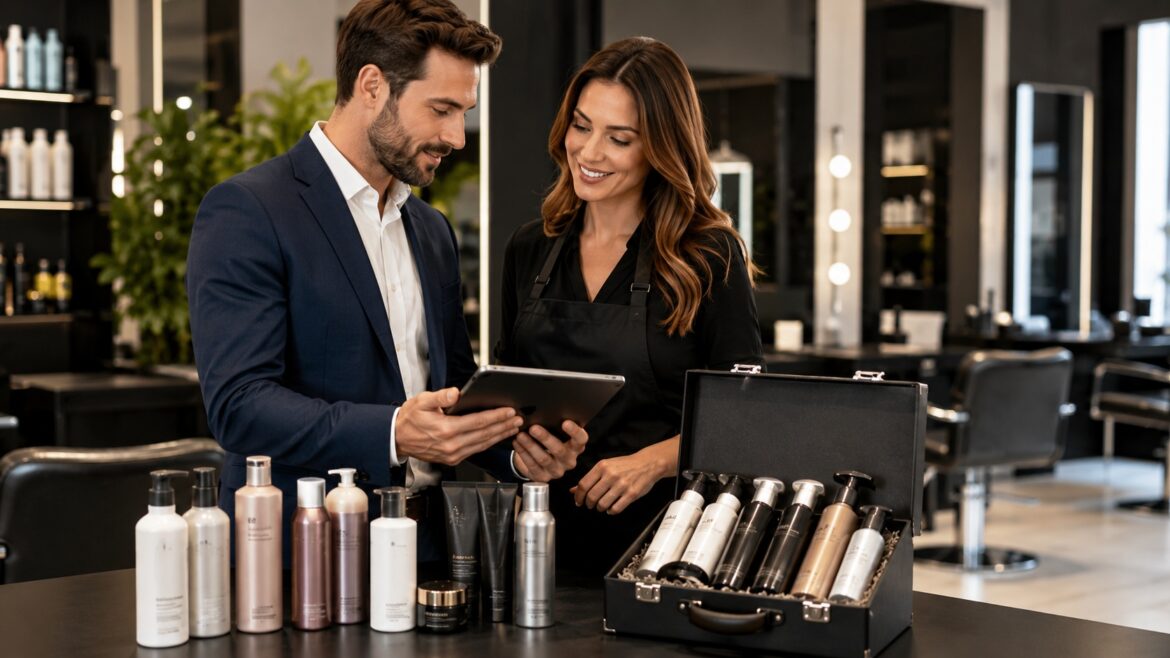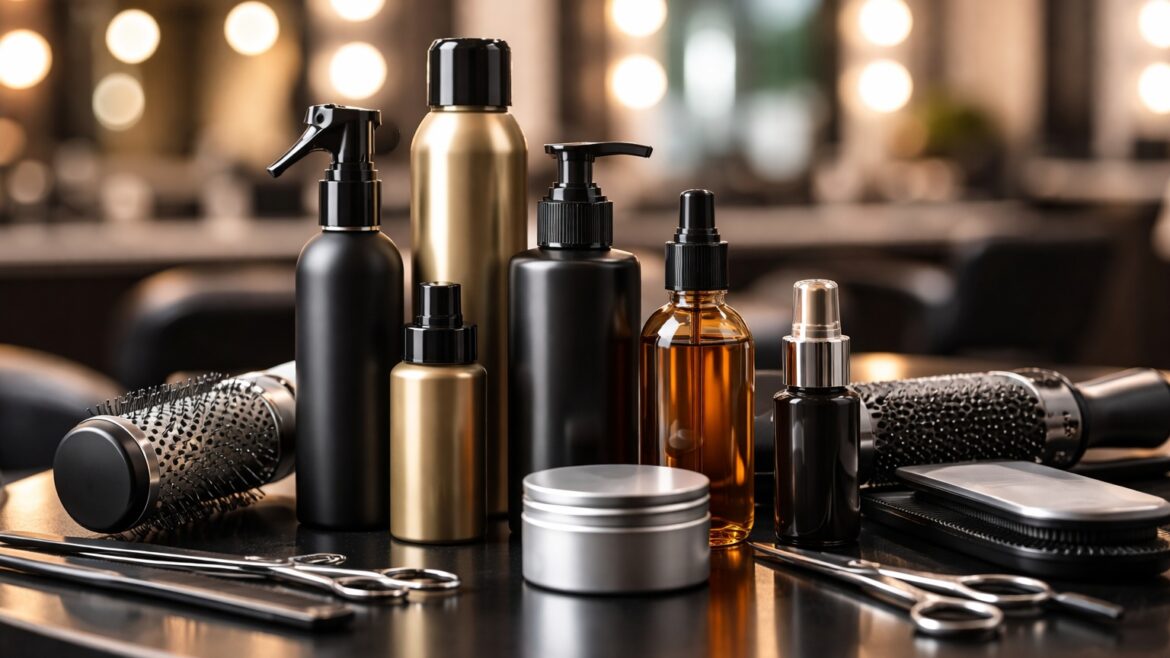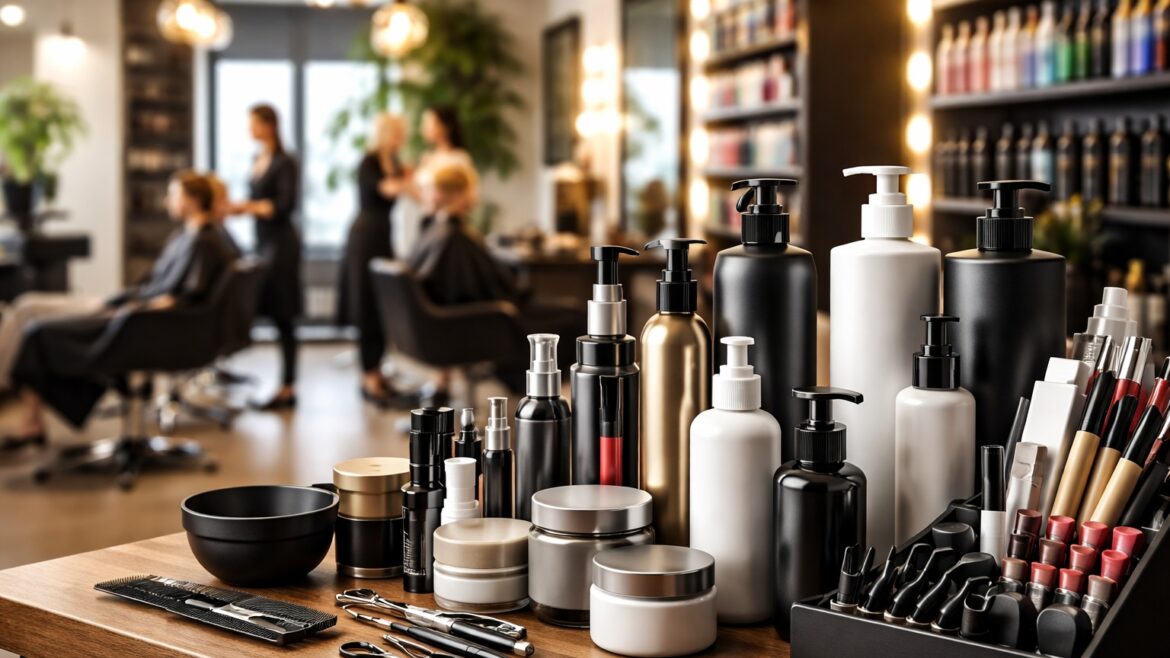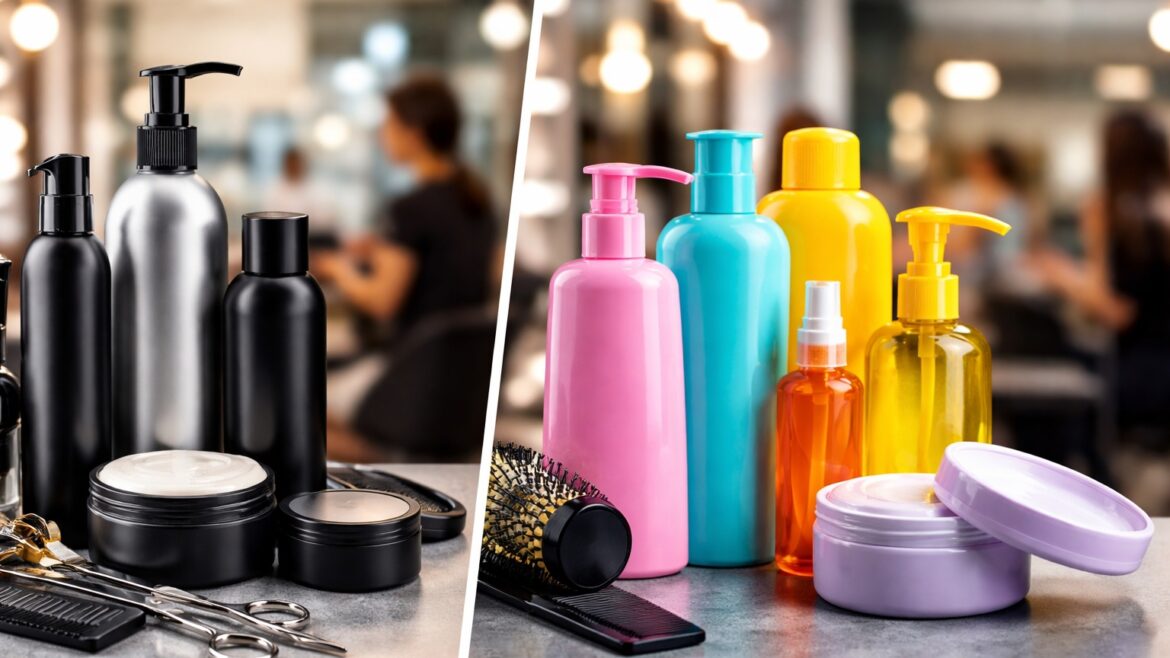
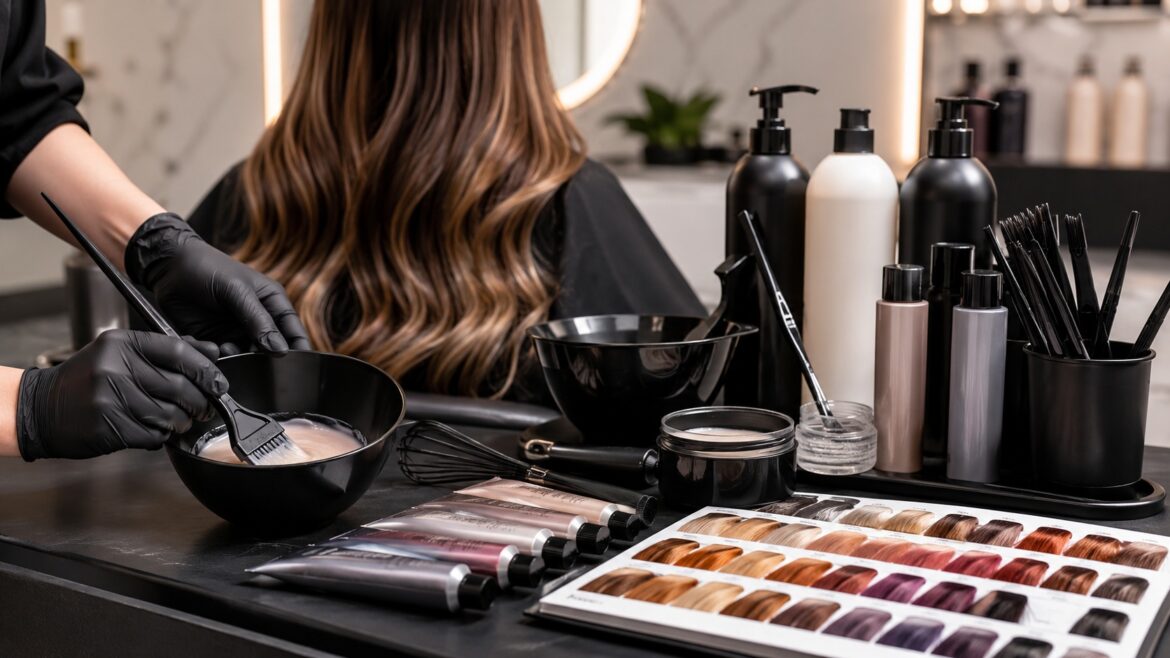
Professional hair coloring requires a conscious selection of dyes, oxidants, and supporting products for the type of treatment and condition of the hair. The effect depends not only on the hairdresser’s technique, but also on the consistency of the coloring system and process control. The right combination of products allows you to achieve the desired color and reduce hair damage.
Key takeaways:
- Professional coloring is based on a system of products, not a single preparation.
- The selection of dye, oxidant, and protective preparations affects both the result and the condition of the hair.
- Understanding the numbering and logic of the color system allows you to predict the result of the treatment.
- Modern technologies reduce hair damage during coloring and lightening.
- The condition and history of the hair should determine the choice of products, not the target color alone.
What does professional coloring look like in a salon?
Coloring is one of the most demanding areas of a hairdresser’s work. The result depends not only on technical skills, but also on the right choice of products for the condition of the hair, the expected result, and the technique used. Professional coloring is not based on a single “universal” product, but on a consistent set in which the dye, oxidant, and supporting products play specific roles.
Types of professional dyes and their application
The salon uses permanent, demi-permanent, and toner dyes. Permanent dyes are suitable for permanent gray coverage, color level changes, or significant corrections. Demi-permanent products allow you to refresh the color, darken or neutralize the shade without significantly interfering with the hair structure. Toners are used for precise color correction after lightening and working on an already lightened base. In salon practice, these products are often combined in a single treatment, rather than treated as alternatives.
Coloring systems and reading numbers
Professional coloring systems are based on a numbering system in which each element has a specific meaning. The first number indicates the color level, i.e., the degree of hair brightness, and the subsequent digits indicate the base tone and reflections responsible for warming or cooling the color. This allows the hairdresser to assess whether a given dye will lighten or darken the hair and in which direction it will shift the shade – towards warm tones, such as gold or copper, or cool tones, such as ash or pearl. Conscious reading of the numbering allows you to choose a product for the initial color and plan the effect of the treatment, instead of correcting an undesirable shade after coloring.
Technologies used in modern coloring
Manufacturers are paying increasing attention to reducing hair damage during coloring and lightening. Ammonia-free formulas reduce scalp discomfort, although they do not always eliminate alkaline processes. Preparations that protect the hair structure during the treatment and systems that stabilize the pigment and improve the condition of the hair after coloring are increasingly being used. Their purpose is not to replace the dye, but to increase the safety of the entire process.
Choosing an oxidant as a means of controlling the effect
Oxidant is one of the basic tools of a hairdresser’s trade. Its concentration affects the degree of lightening, color durability, and hair condition after the treatment. Too high a concentration can further weaken the hair, while too low a concentration will not produce the desired effect. Therefore, when selecting an oxidant, the initial color, previous treatments performed on the hair, and the planned coloring technique should be taken into account.
Summary of coloring product applications
| Type of treatment | Type of product | Purpose of application |
| Gray coverage | Permanent dye | Long-lasting color and full coverage |
| Color refreshment | Demi-permanent | Gentle correction without lightening |
| Toning after lightening | Toner | Neutralization and precise shade |
| Coloring with protection | Bonding system | Damage reduction |
Coloring support products
Modern coloring increasingly rarely ends with just the dye. Pre-treatment products prepare the hair for the treatment, evening out porosity and improving pigment absorption. Bonding products protect the hair structure during coloring, while post-treatments stabilize the color and close the cuticle after the treatment. Their role is particularly important when working on weakened or repeatedly bleached hair.
Coloring and hair condition
The condition of the hair should determine the choice of products. Milder formulas, layering, and adding bonding protection to the treatment work better on damaged hair. Attempting to achieve a strong effect at the expense of hair condition often leads to problems during subsequent visits. Professional coloring is a long-term plan, not a one-time effect.
Coloring products and techniques
Techniques such as balayage, airtouch, and shatush require products with predictable results and good lightening control. In these methods, it is not only the level of lightening that is important, but also the ability to tone precisely and achieve smooth transitions between colors. That is why hairdressers choose dyes, lighteners, and toners that allow them to work in stages and correct the shade without excessively weakening the hair.
The most common mistakes in choosing coloring products
One of the most common mistakes is choosing products based solely on the desired color, without considering the condition of the hair. Another problem is using too high a concentration of oxidant or neglecting protective products. Mixing products from different brands without knowing how they work and not analyzing previous treatments, such as coloring or lightening, leads to unpredictable results and the need for subsequent corrections.
Frequently asked questions
Are ammonia-free dyes less durable?
Not always. Durability depends on the entire formulation, not just the presence of ammonia. In many ammonia-free systems, pigments are stabilized in a different way, which allows for a lasting effect with less damage to the hair.
How to choose an oxidant for highlights?
The choice of oxidant depends on the initial condition of the hair, the planned degree of lightening, and the technique. With highlights, it is important to control the process, which is why lower concentrations and longer processing times are often used.
Are bonding products necessary for every coloring?
Not always, but for weakened, lightened, or repeatedly colored hair, they significantly improve the safety of the treatment and the condition of the hair after coloring.
Can coloring products from different brands be combined?
Yes, but this requires a good knowledge of the formulations and their compatibility. Lack of this knowledge increases the risk of unpredictable results.
Professional hair coloring is based on the conscious selection of products for the technique, hair condition, and desired effect, rather than on a single universal preparation. Understanding the color system, choosing the right oxidant, and using protective products allow you to achieve predictable results without excessive weakening of the hair. It is this process-based approach, rather than the random combination of products, that determines the quality of the hairdresser’s work and the durability of the effect.